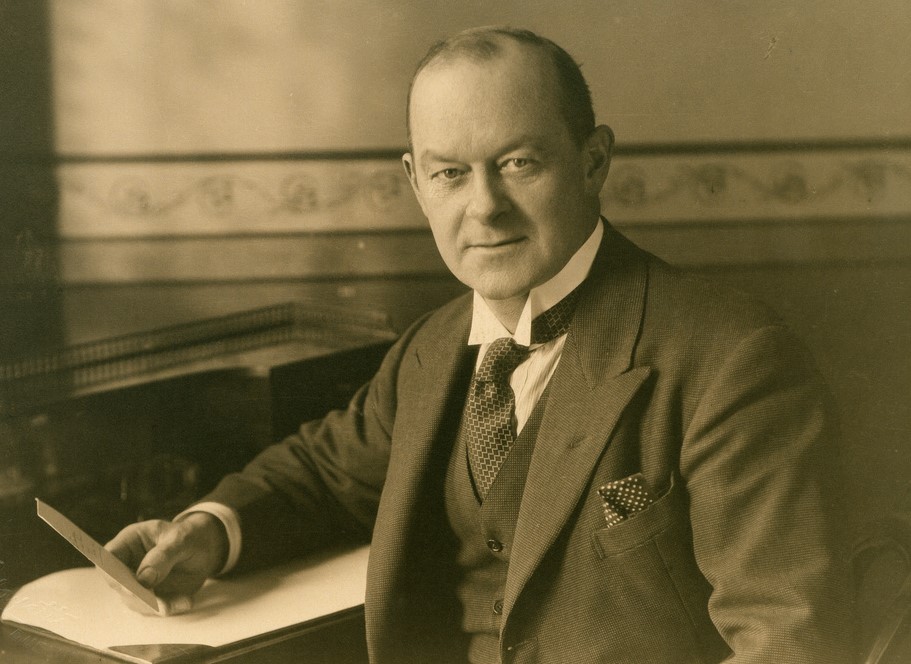
Peter Dawson, (31 January 1882 – 27 September 1961), Australian Baritone. Australia produces fine singers. Today’s blog post features the singing of, Australian Baritone, Peter Dawson. It is obvious, by listening, that Peter Dawson, born in Adelaide in 1882, was trained in the Old Italian Method of Singing to produce Bel Canto. Dawson’s sound quality isContinue reading “Peter Dawson”
Author Archives: Deborah Wai Kapohe
Una Voce Poco Fa…
Everyone knows it, and most lovers of the old school of Italian singing adore it. Yet how few, even of the cleverest vocalists of to-day, can sing it really well! Herman Klein, Herman Klein and the Gramophone, The recording of Una Voce, page 66 Listening to the finest examples of Bel Canto and learning howContinue reading “Una Voce Poco Fa…”
Equalization of the scale downwards
Let it here be noted that Lilli Lehmann’s was one of those voices known as a “soprano sfogato,” having in the head register a thin yet ethereal quality which she used to bring down into the medium as well, until it dropped naturally and often suddenly into the chest tone. This equalization of the scaleContinue reading “Equalization of the scale downwards”
Consonants – Oskar Guttmann
The starting point to introduce the various techniques required for singing consonants today is to choose a Cancone Solfeggio phrase and refer to Oskar Guttmann’s ‘Gymnastics for the Voice’. The majority of the techniques I blog about are for the classical voice. However, this blog is for every style. Every singer should be aware ofContinue reading “Consonants – Oskar Guttmann”
The Lilli Lehmann Project* – Light Coloratura
In a previous post, I demonstrated three voice characters: light coloratura quality, lyric quality and dramatic quality by referring to the lessons in Lucie Manen’s book ‘The Art of Singing’. Manen describes how to achieve the voice characters. She also wrote that Lilli Lehmann performed all three roles in The Tales of Hoffmann. In otherContinue reading “The Lilli Lehmann Project* – Light Coloratura”
Nasal Close
Lilli Lehmann writes “[t]he nasal close of itself brings a new color into the singing…the word is much more clearly intelligible…”. Below is a demonstration of a Cancone solfeggio phrase. The first ‘sol la’ is sung without a nasal close and the second is with a nasal close. Can you hear the second ‘sol la’Continue reading “Nasal Close”
Voice Characters
In previous blogs, I have demonstrated starting the note from the larynx mechanism, the pharynx, the nasal and the imposto. Here is a chance to put these ideas together to create three different voice characters. To achieve this, I have followed Lucie Manen’s book ‘The Art of Singing’ and recalled the teachings of the lateContinue reading “Voice Characters”
Lucie Manen exercises demonstrated
Here are some demonstrations of techniques from pages 26 until 31 of Lucie Manen’s book ‘The Art of Singing’. On a previous blog, I demonstrated the onset of the note using the larynx mechanism. Here is a demonstration of the onset using both the larynx mechanism and, the main resonator, the pharynx mechanism. Manen writesContinue reading “Lucie Manen exercises demonstrated”
Cancone
Classical Singing is not just about being able to sing loud and soft. Classical Singing is about being able to sing with different tone colours and shades of intensity. Here is the opening phrase of a Cancone solfeggio. Solfegii and vocalise are vital for training singers. I will be demonstrating a lot of solfegii andContinue reading “Cancone”
Messa di Voce on ‘u’
Today I made a sound file of messa di voce on my favourite vowel ‘u’. There are two attempts in this sound file. The first attempt was uneven and lacked in its intensity but the second attempt was ok. My iPhone compresses my recordings a lot, but I think it is still possible to hearContinue reading “Messa di Voce on ‘u’”
 Deborah Wai Kapohe